
Industrial Roof Overcladding Scotland
Overcladding guidance for ageing metal roofs, factories, warehouses and industrial buildings across Scotland.
Industrial roof overcladding in Scotland can be a practical alternative to full roof replacement where an existing industrial roof is ageing, weathered or leaking but the structure and roof design are suitable for a new external roof system.
This guide explains when overcladding may be suitable, how it compares with repair and refurbishment, what should be checked first, and why it is commonly considered for factories, warehouses and commercial buildings across Scotland.
This page is part of the Industrial Roofing Scotland information resource provided by Modern Roofing (Scotland) Ltd, established in 2007 and based in Lanarkshire.
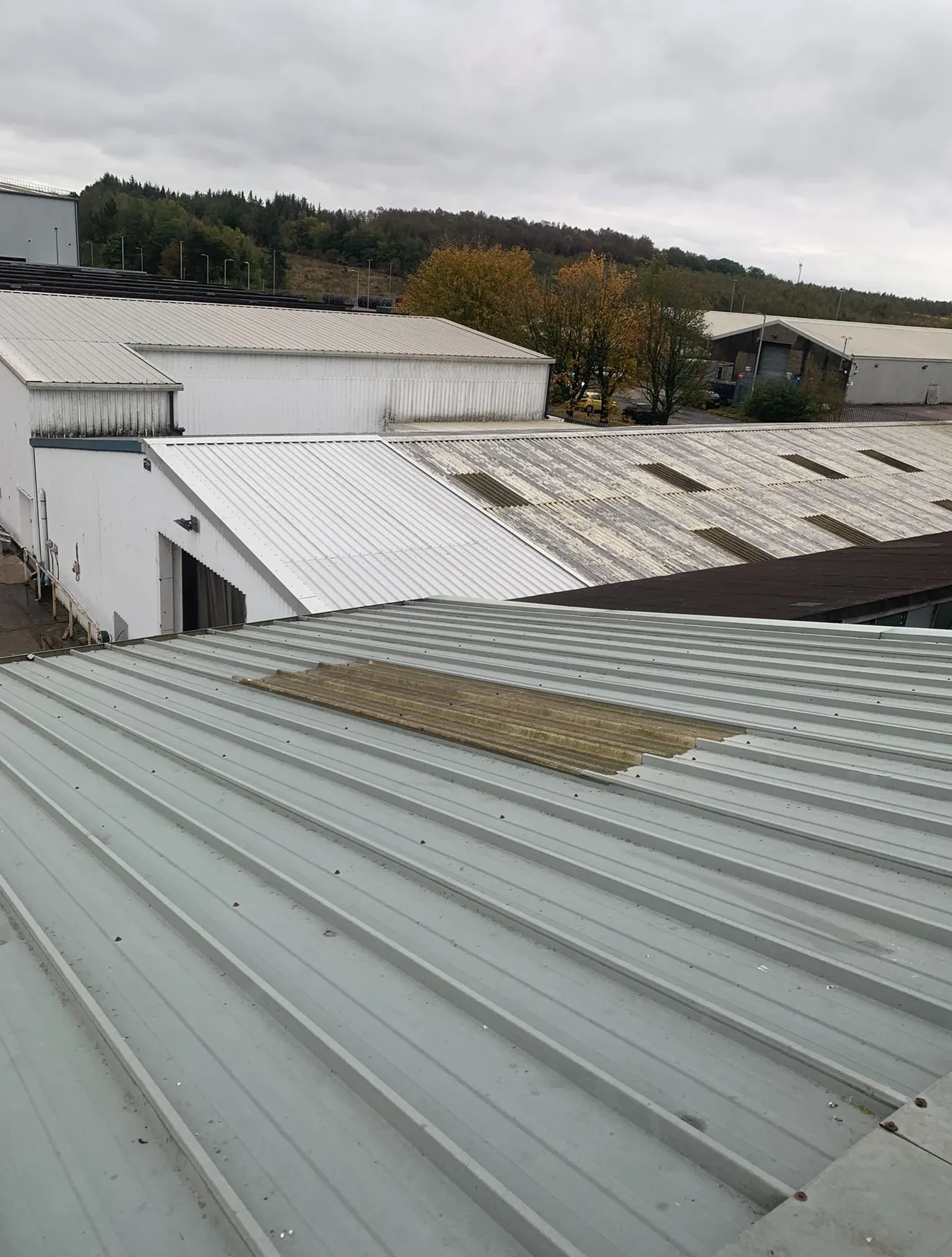
Industrial Roof Overcladding Contractor Covering Scotland
Modern Roofing (Scotland) Ltd provides industrial roofing and roof refurbishment services across Scotland for factories, warehouses, commercial buildings, public-sector premises and large roof areas. Overcladding is often considered when an existing roof has widespread weathering but full roof removal is not the best option.
A properly designed overcladding system can improve weather protection, reduce disruption, renew the external roof covering and extend the useful life of the building when the existing roof and structure are suitable.
What Is Industrial Roof Overcladding?
Roof overcladding is the process of installing a new roof covering over an existing industrial roof. It is most commonly used on older metal roofs where the building owner wants to improve weather resistance without fully stripping the existing roof.
Overcladding is different from a simple repair because it deals with the roof as a wider system rather than patching individual defects. It is also different from full replacement because, where suitable, the existing roof remains in place beneath the new covering.
When Is Roof Overcladding the Right Option?
Industrial roof overcladding may be suitable where the existing roof has widespread age-related defects but the building structure can accept the new system and the roof design is appropriate.
- The roof has repeated leaks across several areas
- The existing metal roof is weathered or corroded
- Repairs are becoming too frequent or too expensive
- The building owner wants less disruption than full replacement
- The roof structure is suitable for an overclad system
- The existing roof can be safely retained beneath the new covering
- The building needs improved weather protection
- The roof needs a more practical long-term solution than patch repairs
Benefits of Industrial Roof Overcladding
Overcladding can be a strong option for factories, warehouses and industrial buildings where the existing roof is no longer performing well but complete removal is not required.
| Benefit | Why It Matters |
|---|---|
| Reduced disruption | Works can often be planned with less exposure of the building than full strip-and-replace work. |
| Improved weather protection | A new external roof covering helps protect the building from rain, wind and weathering. |
| Extended roof life | Overcladding can provide a longer-term solution where repeated repairs are no longer good value. |
| Improved appearance | A new roof finish can improve the look of an ageing industrial building. |
| Potential insulation upgrades | Depending on the system design, insulation improvements may be considered as part of the works. |
| Practical phasing | Works can often be planned around live commercial or industrial operations. |
Overcladding, Refurbishment or Full Replacement?
Overcladding is not the answer for every roof. The correct option depends on the existing roof condition, the roof structure, drainage, weight, fixing points, building use and the long-term plan for the property.
| Option | Best For | Typical Benefit |
|---|---|---|
| Industrial Roof Repairs | Localised leaks, damaged sheets, fixings, flashings or gutters | Cost-effective when the roof is mostly sound |
| Industrial Roof Refurbishment | Ageing roofs with several defects but a usable structure | Extends roof life without full replacement |
| Industrial Roof Overcladding | Older metal roofs where full removal is not required and the structure is suitable | New external roof covering with reduced disruption |
| Full Roof Replacement | Roofs at the end of their practical service life or unsuitable for overcladding | Complete long-term roof renewal |
If the roof only has isolated defects, see Industrial Roof Repairs Scotland. If the roof can be improved through repair, coatings, gutter lining or waterproofing, see Industrial Roof Refurbishment Scotland.
What Should Be Checked Before Overcladding?
Before an industrial roof is overclad, the existing roof and structure should be assessed properly. Poor assessment can lead to drainage problems, fixing issues, trapped defects or a system that is not suitable for the building.
- Existing roof condition
- Structural suitability and loading
- Fixing points and support structure
- Roof drainage and gutter capacity
- Existing rooflights and penetrations
- Flashings, edges and junction details
- Access and safe working arrangements
- Business operations below the roof
- Potential insulation and condensation considerations
- Whether local repairs are required before overcladding
Industrial Metal Roof Overcladding Scotland
Metal roof overcladding is commonly considered for older profiled metal roofs, industrial units, warehouses and factory buildings. These roofs can suffer from corrosion, failed laps, loose fixings, damaged coatings and rooflight deterioration over time.
Where the building is suitable, an overclad roof system can create a renewed external weathering layer while avoiding full removal of the existing roof covering.
Gutters, Rooflights and Details During Overcladding
Overcladding is not only about the main roof sheets. Gutters, outlets, rooflights, flashings, edges, penetrations and transitions all need proper detailing.
Industrial gutters in particular should be considered carefully. If the main roof is upgraded but the gutters remain defective, the building may still suffer from water ingress. In some cases, industrial gutter lining may be part of the wider roof upgrade.
Industrial Roof Surveys Before Overcladding
A roof survey helps decide whether overcladding is suitable or whether repair, refurbishment or full replacement would be better. The survey should consider the roof condition, drainage, structure, access, existing defects and likely long-term performance of the proposed system.
For more detail, see Industrial Roof Surveys Scotland.
Industrial Roof Overcladding Across Scotland
Industrial roof overcladding is used across Scotland on factories, warehouses, commercial buildings, workshops, public-sector buildings, storage facilities and large industrial premises.
Modern Roofing (Scotland) Ltd is based in Lanarkshire and works across Scotland, including Glasgow, Edinburgh, Lanarkshire, Stirling, Falkirk, Ayrshire, Fife, Perth, Dundee, Aberdeen and surrounding areas.
Related Industrial Roofing Pages
Industrial Roofing Scotland
Main guide covering industrial roofing, repairs, refurbishment, overcladding and surveys.
View homepageIndustrial Roof Refurbishment
For ageing industrial roofs where repair alone may not provide the best long-term solution.
View refurbishment pageIndustrial Gutter Lining
For leaking, corroded or poorly draining industrial gutter systems.
View gutter lining pageIndustrial Roof Overcladding Scotland FAQs
What is industrial roof overcladding?
Industrial roof overcladding is the installation of a new roof covering over an existing industrial roof where the structure, condition and design are suitable.
Is overcladding cheaper than full roof replacement?
Overcladding is often less disruptive than full replacement and may be more cost-effective where the existing roof can safely remain in place, but suitability depends on the building and roof condition.
Can every industrial roof be overclad?
No. The existing roof condition, structure, drainage, loading, fixings and building use all need to be assessed before deciding whether overcladding is suitable.
Does overcladding stop leaks?
A correctly designed and installed overclad system can improve weather protection and deal with widespread roof failure, but gutters, flashings, rooflights and details must also be addressed properly.
Which areas are covered for industrial roof overcladding?
Modern Roofing (Scotland) Ltd is based in Lanarkshire and works across Scotland, including Glasgow, Edinburgh, Stirling, Falkirk, Ayrshire, Fife, Perth, Dundee, Aberdeen and surrounding areas.
Need Industrial Roof Overcladding in Scotland?
If your industrial roof is ageing, leaking or no longer suitable for repeated patch repairs, overcladding may provide a practical long-term option where the building is suitable.
Modern Roofing (Scotland) Ltd provides industrial roofing services across Scotland for commercial and industrial buildings.
Visit Modern Roofing (Scotland) LtdModern systems. Traditional values.